George Ryder
ACD/Senior Copywriter

Trump’s tax reforms – will they make business great again?
Earlier this month, the Senate voted in Donald Trump’s controversial $1.4 trillion tax reform bill by the narrow margin of 51-49. It represents the largest overhaul to America’s tax system in 31 years and is a major victory for the U.S. president. He proclaimed on Twitter:
“We are one step closer to delivering MASSIVE tax cuts for working families across America. Special thanks to @SenateMajLdr Mitch McConnell and Chairman @SenOrrinHatch for shepherding our bill through the Senate. Look forward to signing a final bill before Christmas!”
A key aspect of the bill is the reduction of the tax rate on corporate income from 35% to 20%. According to the Unified Framework for Fixing our Broken Tax Code, the rationale is to “prevent companies from shifting profits to tax havens” and limit “offshoring”. This means multinational corporations will now be able to repatriate foreign income on “high-profile returns” (such as intellectual property) back to the U.S. at a rate of 10% (12% for cash held offshore and 5% for non-cash assets). The end result is to try and substantially boost the household income of American workers.
Naturally, there are many differing opinions on what these seismic changes will actually bring. Bloomberg cites the banking, pharmaceutical, technology and fossil fuels industries as some of the potential winners. However, renewable energy companies look set to lose out. The Financial Times put it rather bluntly by saying: “If you are a global company that has made leveraged investments in U.S. renewable energy production in recent years, those assets now look like a bird that has run into a wind turbine.”
To get under the skin of these complex changes, a closer look at the current U.S. tax system is needed. As it stands, the U.S. takes a “worldwide” approach. This means that any American corporation’s profits are taxed at the same rate regardless of whether they are earned domestically or abroad. However, what must be noted is that profits made abroad aren’t taxed in the U.S. until they are “repatriated” from a foreign subsidiary to a U.S. parent company. According to Reuters, Trump’s tax reform bill promises a minimum tax rate on foreign income. It will calculate an average for all foreign earnings combined – the so-called “global minimum”.
Some analysts claim that this system has a fundamental flaw. The more an American company moves its profitable operations to countries that have tax rates of 20% or higher (often richer countries perceived as America’s economic competitors), the more it can shift profits to tax havens – without paying taxes on those profits. Ed Kleinbard, a law professor at USC and former chief of staff for Congress’s Joint Committee on Taxation, told Bloomberg, “Companies will double down on tax-planning technologies to create a stream of zero-tax income that brings their average down to that minimum rate.”
Conversely, pro-Trump commentators dispute this. In the article Trump hands American small businesses and workers a win, Stephen Moore and Alfredo Ortiz argue that “In reality, nearly all American small businesses, even those that don’t qualify for the new 25%, would get tax relief under this bill… [and that it will] save ordinary small businesses thousands of dollars a year in taxes that can be reinvested back into their businesses, employees, and communities.”
Ultimately, these tax reforms will have vast implications. Whether they will turn out to be what Donald Trump and the Republican Party envisage is still up for debate. Tax can undoubtedly be a convoluted and complex issue, and it’s in times like these that businesses need expert guidance to ensure they are complying with tax laws in the most efficient way possible.
If you have any questions on how these tax reforms may impact your business, or you would like to discuss business strategy, please contact us today.
Three quick tips to improve your writing
On the Road by Jack Kerouac is one of my favourite books. Its meditative and poetic prose tells the story of his travels with his delinquent friends across 1950s America, as they delve into jazz, drugs and sex. A talisman of counterculture, it’s regularly ranked as one of the greatest novels of all time. But 8% of the reviews on Amazon only deem it worthy of a single star. A reviewer called Northern Joe Bloggs labelled it “self-indulgent garbage”.
Such reviews highlight the very subjective nature of writing. Though I disagree with his point of view, there’s ultimately no concrete way of me disproving Northern Joe Bloggs. That’s the problem when trying to define what good writing is: everyone has an opinion. Nevertheless, with the aid of scientific research and some sage words from a renowned master, I’ll give it a try.
Use short sentences
You can quickly gauge the level of a writer by the average length of their sentences. Crafting concise sentences is a skill which greatly improves the readability of your work. The gov.ukwebsite states, “research has shown that when average sentence length is 14 words, readers understand more than 90% of what they’re reading. At 43 words, comprehension drops to less than 10%.”
Writers who tend to use long sentences can end up tiring the reader as they meander on with no specific goal because the writer hasn’t accurately grasped what it is they’re trying to say but they try to fit everything in and if you had to read another four or five sentences that go on like this I’d almost certainly lose you as a reader.
Also, as a general rule, keep the word limit of your sentences to 25. Look back at your sentences and check which words are superfluous. I think of sentences like an athlete – they work hard and have zero fat.
Feel the rhythm
Short sentences are great, but this doesn’t mean you start writing like a robot. I love On the Roadfor its stream-of-consciousness style; it carried me away on a wave that I’d never experienced before.
Writing guru Gary Provost articulated the importance of rhythm better than I ever could:
“This sentence has five words. Here are five more words. Five-word sentences are fine. But several together become monotonous. Listen to what is happening. The writing is getting boring. The sound of it drones. It’s like a stuck record. The ear demands some variety.
Now listen. I vary the sentence length, and I create music. Music. The writing sings. It has a pleasant rhythm, a lilt, a harmony. I use short sentences. And I use sentences of medium length. And sometimes, when I am certain the reader is rested, I will engage him with a sentence of considerable length, a sentence that burns with energy and builds with all the impetus of a crescendo, the roll of the drums, the crash of the cymbals–sounds that say listen to this, it is important.
So write with a combination of short, medium, and long sentences. Create a sound that pleases the reader's ear. Don't just write words. Write music.”
Break it up
Use sub-heads. And use paragraphs properly. This is especially important for web copy. Chances are, when you first came to this page you scrolled from top to bottom and immediately scannedfor the relevant information. If you liked what you saw, you started to read the article from the beginning. Sub-heads and concise paragraphs make it easier to get the gist of a web page. That’s why I broke this article up into three tightly-organised sections.
Hopefully, these nuggets have shed a little light for you on how to write better copy. Northern Joe Bloggs may disagree, but, if you follow just one of these tips, your reader will thank you for it. (That’s my opinion, anyway.)

Grumpy Cat – all hail the queen
20,774,158. That’s the number of YouTube views for the original Grumpy Cat video. The 55-second clip shows the famous feline lying on her back, face to camera, as her owner tickles her in an attempt to elicit a joyous response. But the pussy’s face is unmoved. Grumpy Cat’s frown is relentless; it is fixed, ceaseless, infinite. For all we know she could be feeling the light of god, but the genetics will never let it show. It's as if her face has been set in stone since time immemorial. Yet this grimace has spawned an empire. There are more videos with views in the millions, countless memes, books and even a film – Grumpy Cat’s Worst Christmas Ever. And last month, Forbes cemented her internet supremacy by ranking her the most influential pet on social media with a total reach of 68 million, fending off stiff competition from the earless Waffles the Cat and fashionista Doug the Pug.
Those are some impressive stats. And it got me thinking; with such colossal numbers, shouldn’t every business have an animal ambassador? At The Frameworks, there’s been general chatter about getting a pet. The original assumption was that it would be a) fun to have a resident pooch or kitty, and b) we would benefit from the scientifically proven effects of increased morale, higher productivity and reduced stress. But now it appears that it could also be key to our social media strategy.
Cluck-bait
So, can The Frameworks learn some new tricks from the internet sensation Grumpy Cat? I think so.
Firstly, we’d need a creature that stands out. In Forbes’ ranking, most of the animals are either cats or dogs who sport a genetic deformity that comes across as cute. And that’s why I’ve gone for Clara the Chicken.

Rescued from a battery farm, she comes to us in a featherless, decrepit state, but we nurse her back to full health and plumage. She has abnormally bulbous eyes and can only run backwards. We create her own Instagram account. We dress her up in funny clothes. We post artfully composed photos of the delicious omelettes made from her eggs. And as expected, Clara (and The Frameworks) breaks the internet. She usurps Grumpy Cat as the world’s most influential pet. Ed Sheeran pens a ballad in her honour. Google+ pays us millions for exclusive Clara content, and Mark Zuckerberg can only watch in despair as Facebook users flock to the once maligned platform – all to watch the birth of Clara’s first chick.

Thought vapidity
The Roman poet Juvenal once said, “Two things only the people anxiously desire – bread and circuses.” And nothing has changed in 2,000 years. Meaningful thought leadership is no match for vacuous and inane animal antics. The audio book for Plato’s Republic has a measly 377,558 YouTube views – I doubt Grumpy Cat gets out of bed for that. Stalin once said of Russian tank production, “Quantity has a quality of its own”, and in an age of likes, shares and retweets, can insightful truths and thought-provoking content compete with animals that make us lol?
Keep ‘em scrolling
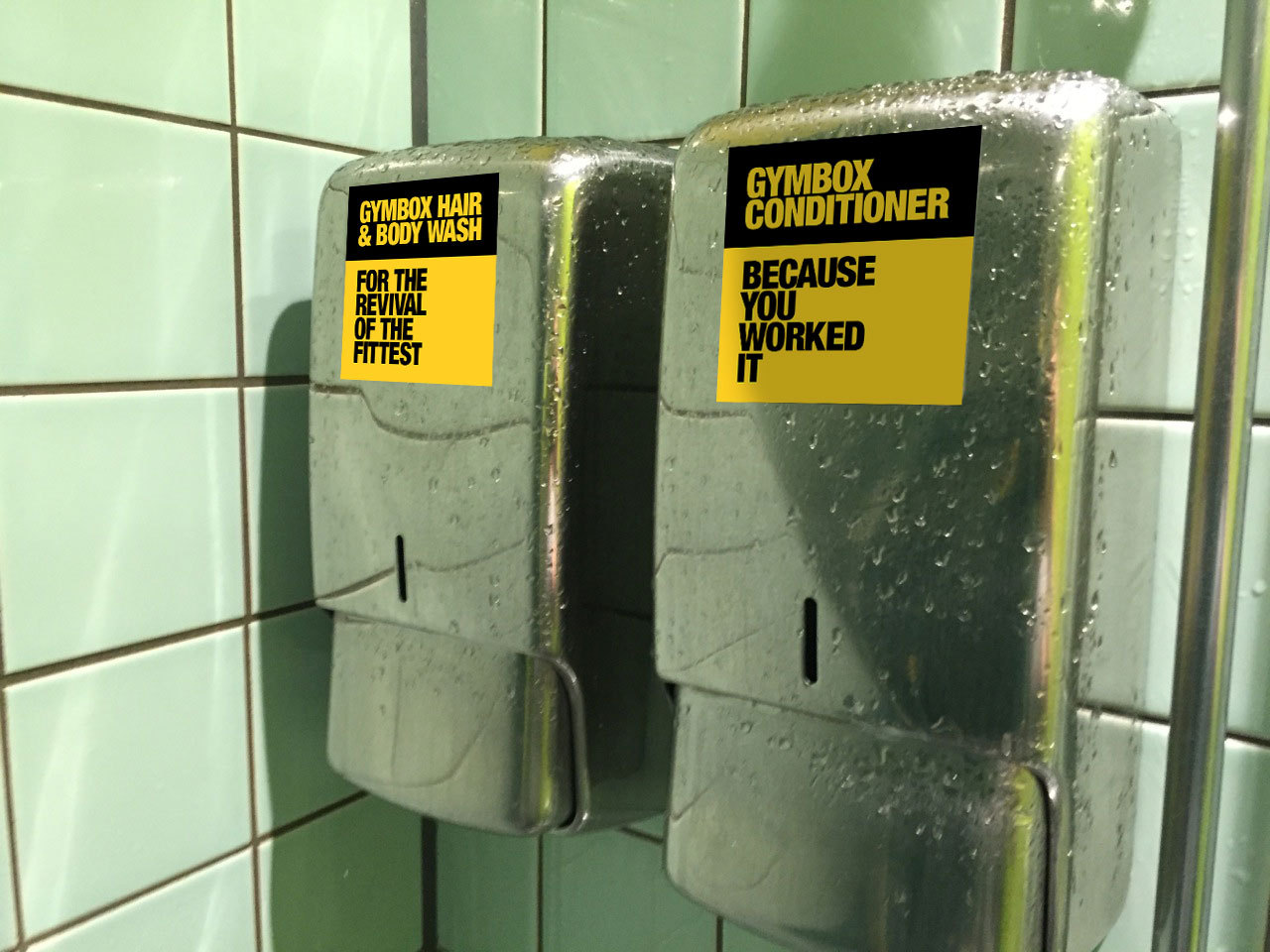
The truth is that there’s no silver bullet to any of this. Not even Clara can lay you the golden impressions egg. The companies that succeed at racking up the impressions and earning engagement do so because they put a lot of thought into what they say, how they say it, and who they say it to. And they do it consistently. Take Gymbox for example. Its tone of voice permeates every aspect of its business, from posters on the London Underground to the shampoo dispensers in its showers. Lego is another company that does it well. This ad communicates everything the brand stands for in a single word. But it’s not just adverts; this Bloomberg article about Paul Krugman has the confidence to inject fun and levity by paying homage to side-scrolling 16-bit beat ‘em ups.

To conclude, a business cannot rest its marketing hopes on a pet tortoise. And as entertaining as it would be for Tim Cook to have an orangutan unveil the new iPhone, I doubt it would serve the brand well in the long term. You should also carefully consider whether spending megabucks on leveraging Grumpy Cat’s or Doug the Pug’s vast reach would translate into sales for your service or product. Just know your audience and keep it relevant.
Oh, and get an office pet – those things will brighten up your day.